
レストランへ向かう廊下に掲げられた、
森の記憶を宿す一枚の布
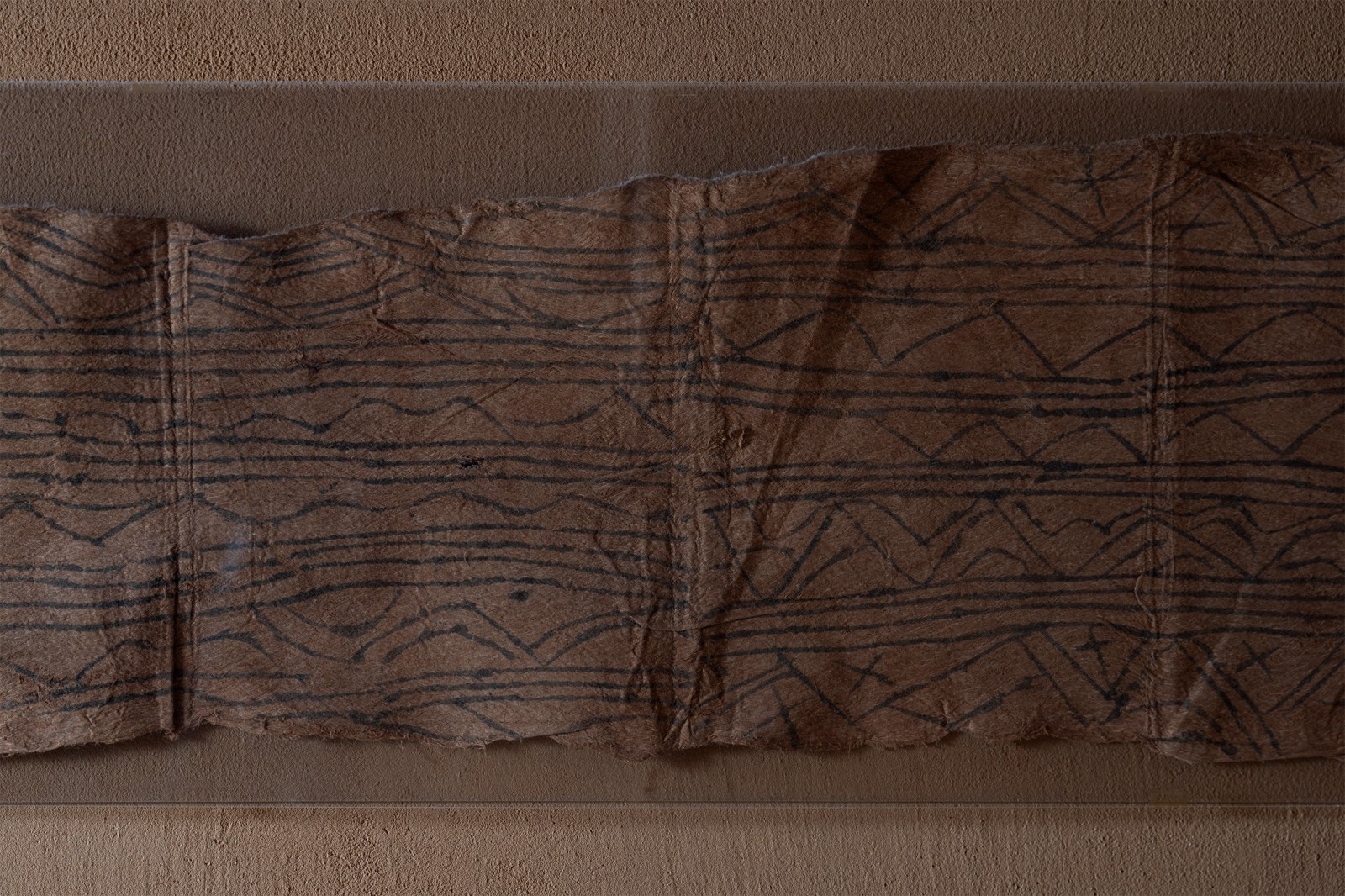
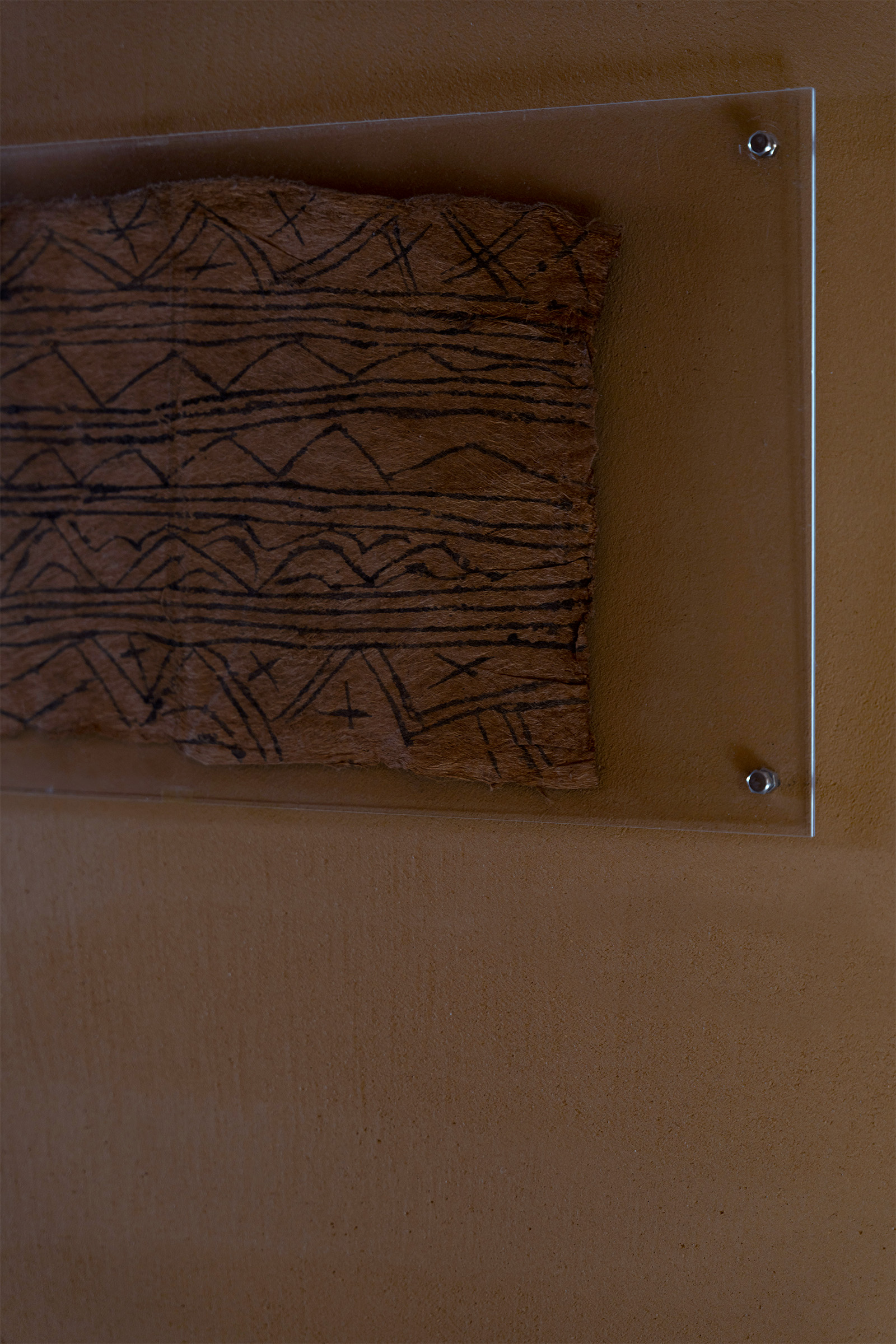
高山荘 華野の玄関から続く廊下、レストラン前の一角に展示されているのは、アフリカのピグミー族によるタパクロス(タパ/樹皮布)です。
タパとは、木の皮を叩いて繊維をほぐし、布状に仕立てたもの。オセアニアやポリネシアの文化として知られていますが、実はアフリカや南米にも同様の文化が存在します。本作は、熱帯雨林に生きる森の民・ムブディ族(ピグミー)が制作したものです。
彼らは移動しながら森や川から食料を得る、極めてシンプルな生活を営んできました。イチジク科の樹皮を数日間叩き続けて薄く伸ばし、乾燥させた布の上に、指や植物の茎、棒などで文様を刻んでいきます。その工程は装飾というより、祈りや記憶を刻む行為に近いものでした。
高山荘 華野では、タパを三点所蔵しています。
最初の一枚は、館主が師事する華道家から譲り受けたもの。額装せず、自作の透明なアクリルフレームに収めることで、民族資料ではなく、現代の空間に響くコンテンポラリーアートとして捉え直しました。
展示前は空間との相性に迷いもありましたが、実際に据えた瞬間、館内の空気が引き締まり、新たな魅力が生まれることに館主自身が驚いたといいます。
本作は、日本の美術評論家であり骨董商でもあった故・坂田和實氏のコレクションに由来する一枚で、先の作品と同様に館主自ら透明アクリルフレームを自作し、展示しています。
森の時間を纏ったこの布は、食事へ向かうわずかな時間に、静かに感覚を研ぎ澄ませてくれる存在です。
Displayed along the corridor leading to the restaurant,
a single cloth imbued with the memory of the forest.
Displayed in a corner of the corridor extending from the entrance to the restaurant at Takayamaso Hanano is a tapa cloth made by the African Pygmy people.
Tapa is a textile created by pounding tree bark until its fibers are loosened and shaped into a cloth. While tapa is most commonly associated with the cultures of Oceania and Polynesia, similar traditions can also be found in Africa and South America. This particular work was created by the Mbudi people, a Pygmy group known as inhabitants of the tropical rainforest.
Living a highly simple, nomadic life sustained by the forest and rivers, they produced tapa by pounding the bark of fig trees over several days, thinning it into sheets and allowing it to dry. Patterns were then added using fingers, plant stems, or sticks. This process was less about decoration than it was an act of inscribing prayer, memory, and lived time.
Takayamaso Hanano holds three tapa works in its collection.
The first was received from the innkeeper’s ikebana mentor. Rather than framing it conventionally, the innkeeper chose to house it in a self-made transparent acrylic frame, reinterpreting the piece not as an ethnographic artifact but as contemporary art resonating within a modern space.
Before installation, there was some hesitation about how the work would harmonize with the interior. Yet the moment it was placed, the atmosphere of the inn sharpened, revealing a new depth—an effect that surprised even the innkeeper.
This work originates from the collection of the late Kazumi Sakata, a Japanese art critic and antique dealer. Carrying the quiet time of the forest within it, this cloth gently sharpens the senses during the brief walk toward the dining experience.