
国境を越えた美意識が響き合う、
一期一会の室礼。
歩みを止める、廊下の一角。
白が奏でる、凛とした空気。
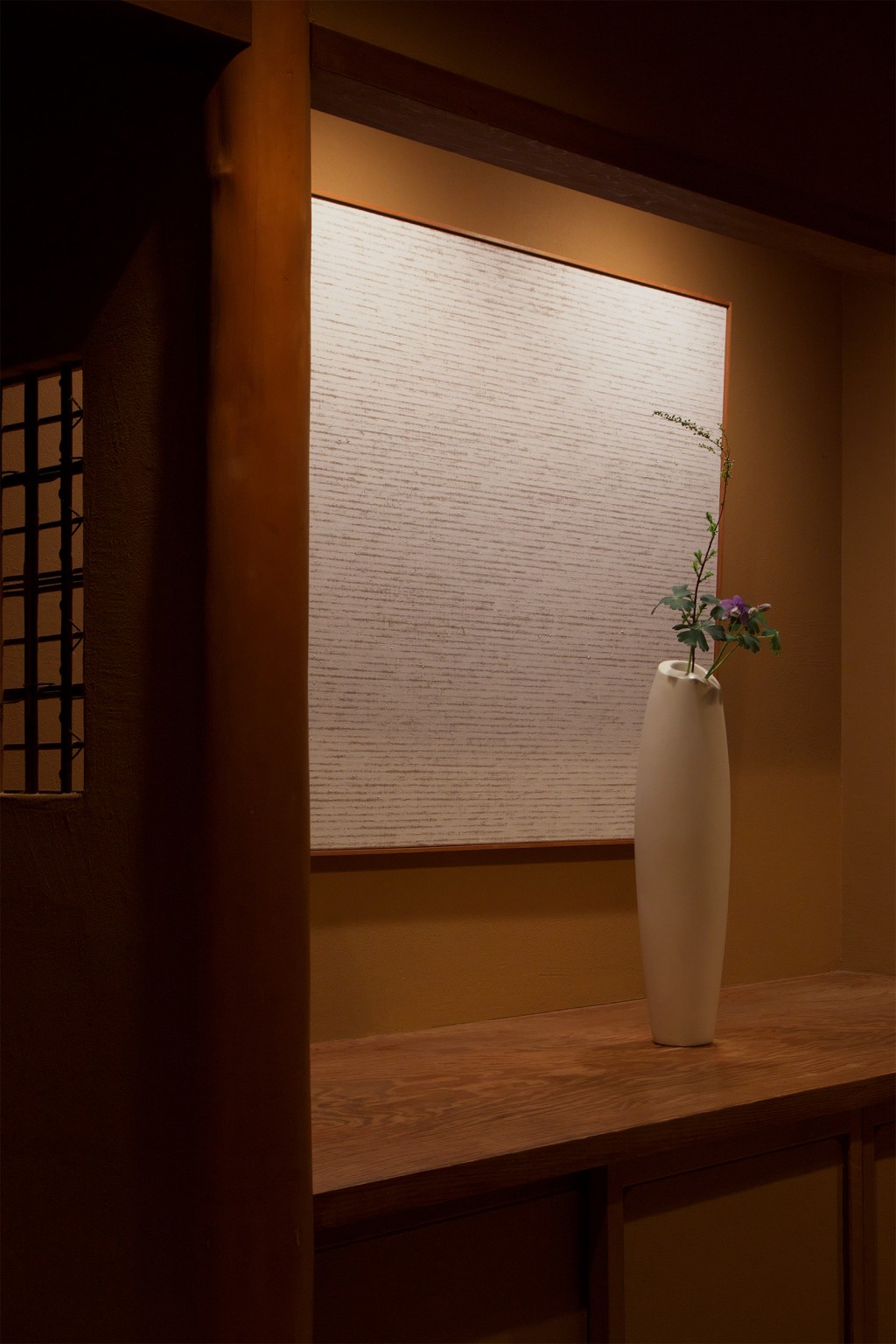
客室のある華野館へと続く長い廊下。その一端に設けられた「壁床(かべどこ)」と呼ばれるアルコーブに、二つの作品が静かな存在感を放っています。
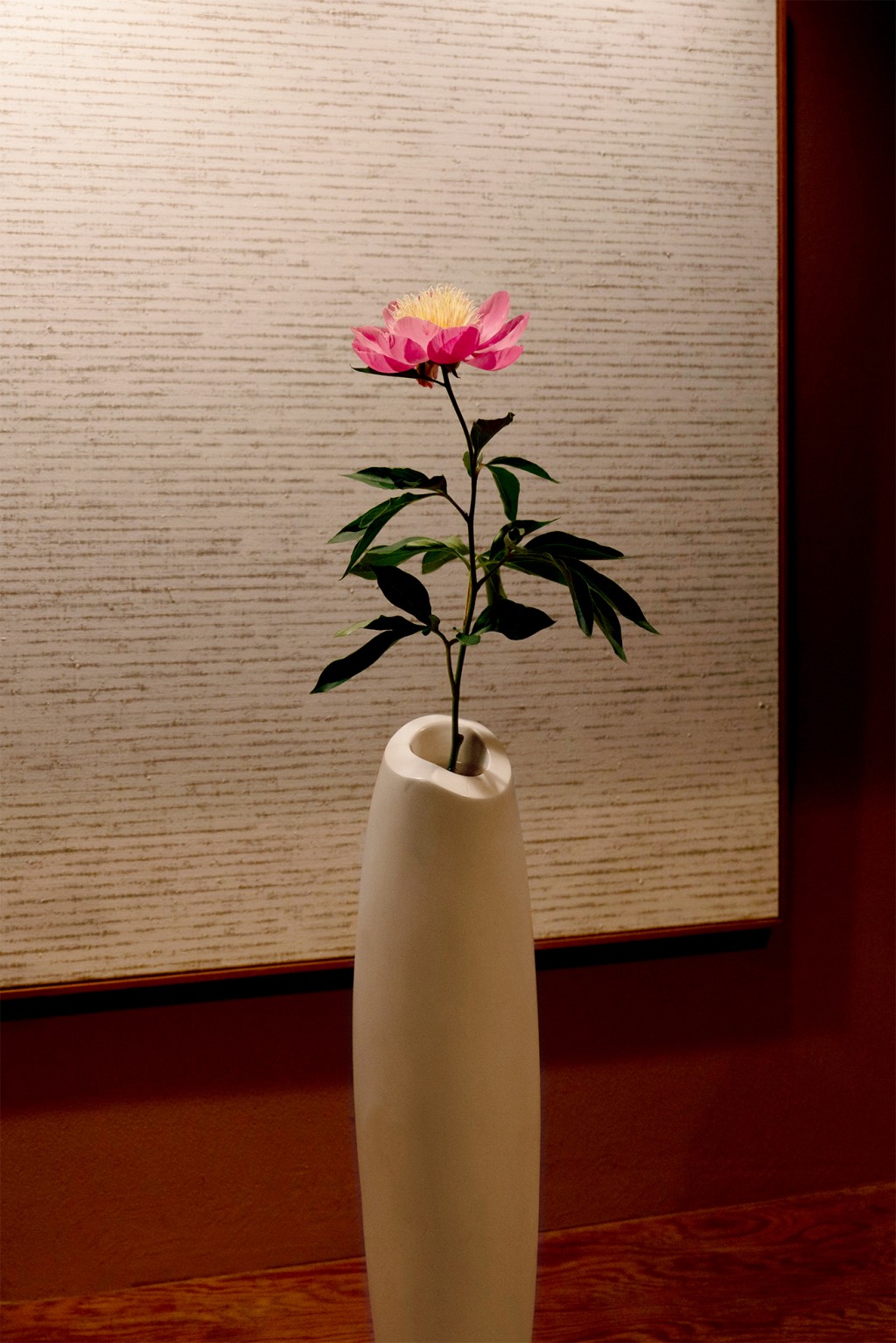
壁面を飾るのは、イギリスの現代美術家エドウィナ・リープマン氏による抽象画です。白を基調とした画面をじっと眺めれば、薄い色彩の層が幾重にも重なり合い、吸い込まれるような奥行きを湛えていることに気づかされます。
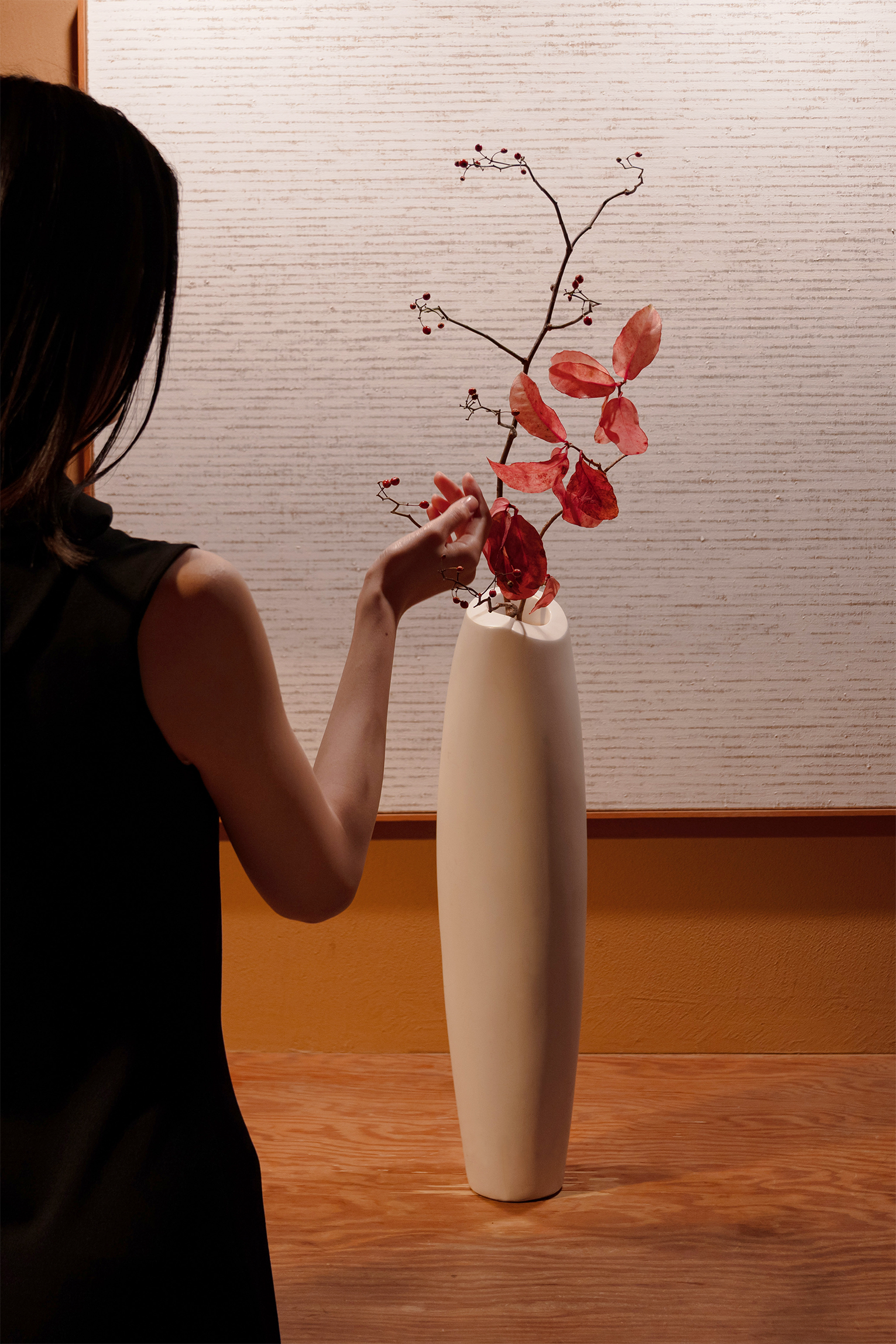
その手前に据えられたのは、フランスのデザイナー、カトリーヌ・メミ氏の手による花器。彼女は「ニュー・ミニマリズム」の旗手として知られ、その作品は日本の「禅」や「茶の湯」にも通じる精神性を宿しています。花器という枠を超え、一つのオブジェとして空間を支配するような、力強い静寂を纏っています。
この室礼(しつらい)は、館主の深い縁から生まれました。
花器は、かつて師事した華道の師の作品集に見出し、抽象画は、茶の湯と現代美術の目利きとして知られる谷松屋十三代目当主・戸田博氏の推薦によって迎え入れたものです。
館主が自ら手を入れた「なげいれ」の野花が添えられたとき、イギリス、フランス、そして日本の美意識が一つに溶け合い、廊下の空気は凛と引き締まります。国境を越えた女性たちの手仕事が、華野が追い求める「時代や国を問わない普遍的な美」として、お客様の心を静かに震わせます。
An encounter where cross-border aesthetics resonate in harmony—
A once-in-a-lifetime shitsurai.
A quiet pause in the corridor.
A dignified atmosphere orchestrated by white.
Along the long corridor leading to the guest rooms of the Hanano building, a small alcove known as a kabe-doko hosts two artworks that exude a quiet, profound presence.
Adorning the wall is an abstract painting by British contemporary artist Edwina Leapman. Gazing deeply into the predominantly white canvas, one begins to notice myriad thin, translucent layers of color overlapping, imbued with a captivating depth that seems to draw the viewer gently inward.
Placed before the painting is a vessel designed by Catherine Memmi. Celebrated as a pioneer of "New Minimalism" in France, her creations harbor a spirituality often likened to Japanese Zen or the Way of Tea. Transcending its role as a mere vase, it possesses a powerful serenity, commanding the space as a singular objet d'art.
This shitsurai (harmonious arrangement) was born from the proprietor’s deep personal connections. The vessel was discovered within a collection book belonging to the proprietor's former ikebana (flower arrangement) master. The abstract painting was acquired upon the recommendation of Hiroshi Toda, the 13th-generation head of the prestigious Tanimatsuya, who is highly respected as a connoisseur of both traditional tea ceremony and contemporary art.
When a seasonal wildflower—arranged in the natural nageire style by the proprietor’s own hand—is placed within the vessel, the aesthetics of Britain, France, and Japan seamlessly melt into one, rendering the air in the corridor crisp and refined. The craftsmanship of these women, transcending national borders, embodies the "universal beauty unbound by era or origin" that Hanano continually seeks, quietly touching the hearts of our guests.